Real estate websites have a specific job: help visitors discover properties, understand locations, evaluate credibility and contact the right person. Visual polish matters, but usability determines whether visitors can move from browsing to enquiry.
What a Real Estate Homepage Should Do
Use the opening area to communicate the market you serve and direct visitors toward listings or a clear enquiry path. Avoid overwhelming the homepage with every available property.
Property Discovery Should Be Simple
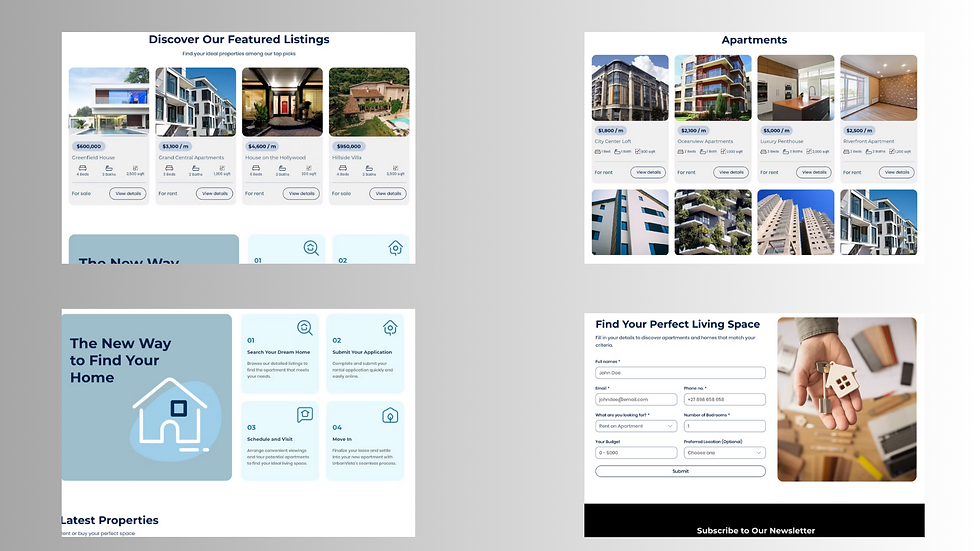
Useful property pages can organize information such as price, property type, location, key features, photographs and enquiry options. Filters should help visitors narrow the inventory rather than add unnecessary complexity.
Make Visuals Work Harder
Real estate is highly visual. Use consistent photography, image galleries and floor-plan or neighborhood information where available. Compress images appropriately so visual quality does not create unnecessary performance problems.
Build Trust Around the Listings
Agent profiles, company information, testimonials, market insights and clear contact details can help visitors understand who is behind the listings.
Use Maps and Location Information
Location is central to property decisions. Map integration, neighborhood information, nearby amenities and local market content can make property pages more useful.
Put Lead Capture at Natural Decision Points
A contact form should appear where the visitor has enough information to take action. Examples include property pages, agent sections and valuation or consultation pages.

Use Content to Support Local Discovery
A real estate blog can cover neighborhood guides, market explanations, buying or renting questions, property-care tips and local updates. Each article should serve a real audience rather than exist only for keywords.
Urban Vista-Style Feature Checklist
☐Hero with clear CTA
☐Filterable listings
☐Strong property galleries
☐Agent profiles
☐Maps
☐Enquiry forms
☐Testimonials
☐Blog
☐Responsive design
☐Search-friendly page structure
☐Restrained animations

FAQs
Does every real estate site need property filters?
Filters are useful when inventory is large enough to justify them. Smaller portfolios may benefit from simpler navigation.
What makes a property page effective?
Clear facts, strong images, location context, relevant features and an obvious next action.
Should a real estate website have a blog?
It can be useful for local expertise and educational content when the business can maintain it consistently.